 admin
admin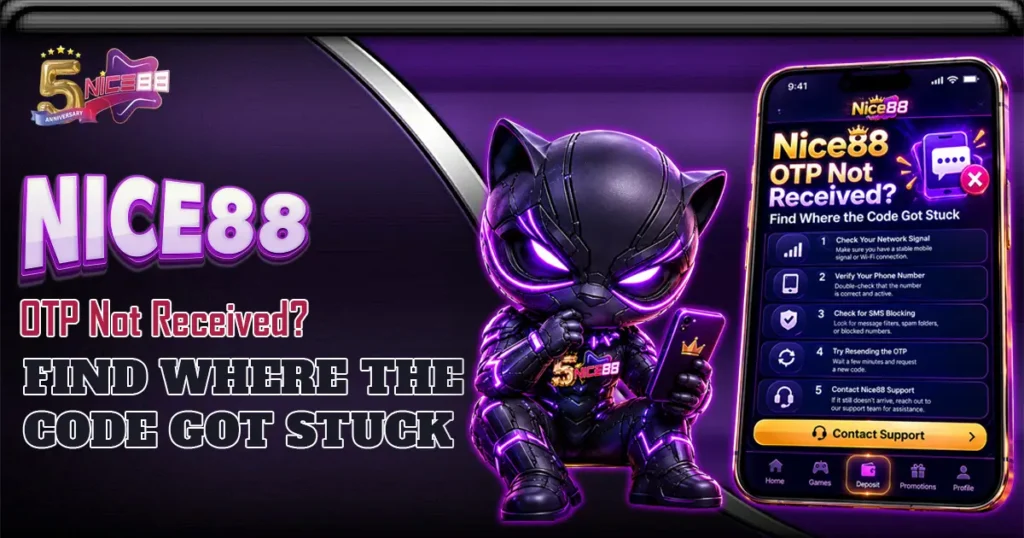
Nice88 OTP Not Received problem can stop you at a verification screen even when your account details are otherwise correct. The missing code may relate to the contact information being used, mobile signal, message delivery, an expired request, or repeated OTP attempts.
The best approach is not to keep pressing Resend. First, confirm where the OTP should arrive and whether your registered contact details are correct. Then check your phone, connection, message filters, and the verification screen. If the issue occurs during Nice88 Login, working through these areas one at a time can help you identify whether the problem is with the request, delivery, or code itself.
Why Is My Nice88 OTP Not Received?
An OTP is a temporary verification code used to confirm an account action. If the code does not arrive, the first task is to determine whether it was requested successfully and where it was supposed to be delivered.
Use the symptom you can see as your starting point.
| What Happens | Possible Area to Check | First Action |
| No message arrives | SMS or signal | Check mobile connection |
| Wrong number is displayed | Account details | Verify registered number |
| Old OTP arrives late | Delivery delay | Use the newest valid code |
| Code is rejected | OTP validity | Request a fresh code if available |
| Multiple codes arrive | Repeated requests | Use the latest code |
| Verification page expires | Session | Restart the verification step |
Do not assume that every missing OTP has the same cause. A Nice88 OTP Not Received situation should be traced from the request itself before you start changing unrelated account or device settings.
Confirm Where the OTP Should Arrive
When Nice88 OTP Not Received appears to be the problem, first check the verification screen for information about the destination.
If part of a phone number is displayed, compare the visible digits with the number connected to your account. Do not continue requesting codes if you notice that the destination appears incorrect.
Also confirm that the SIM connected to that number is currently available on your device, particularly if you use multiple SIM cards or recently changed phones.
For a Nice88 OTP Not Received issue, confirming the destination early can prevent repeated requests from being sent to a number you are not currently checking.
Check Your Mobile Signal
An OTP delivered by SMS depends on your phone being able to receive messages.
Look at your current mobile signal. If reception is weak or unavailable, move to an area with better coverage and check again. You can also confirm whether ordinary SMS messages are reaching your phone.
Airplane mode can temporarily disconnect the device from the mobile network. Make sure it is disabled when waiting for an SMS code.
If your phone has been offline, newly restarted, or temporarily without signal, incoming messages may not appear exactly when you expect them.
If Nice88 OTP Not Received continues while other SMS messages are also failing to arrive, the mobile connection deserves attention before you generate more verification codes.
Don’t Keep Pressing Resend
Repeatedly requesting another code is not always helpful.
With a Nice88 OTP Not Received issue, several rapid requests can make it difficult to know which OTP belongs to the latest verification attempt. An older message may arrive after a newer code has already been generated.
If a resend option is available, use it deliberately rather than repeatedly tapping it.
When several OTP messages eventually appear, pay attention to the order in which they were requested and use the newest code that remains valid according to the verification screen.
What If the OTP Arrives Late?
A delayed OTP creates a different problem from one that never arrives.
If the code reaches your phone after the verification screen has changed or a newer OTP has been requested, the older code may no longer be useful.
Do not repeatedly enter every code in your message history.
Instead, return to the active verification screen and determine which request is current. If a new OTP must be generated, follow the option displayed there.
For a Nice88 OTP Not Received case that later turns into delayed delivery, keeping track of the newest request is more important than trying codes randomly.
Check SMS Filtering and Blocked Messages
Your phone may be receiving messages while filtering some of them away from the main inbox.
Check spam, blocked, filtered, or unknown-sender areas available in your messaging app. The exact names vary between devices.
Also look for settings or third-party apps that manage incoming SMS messages. A filtering feature can sometimes make a message difficult to find even though it reached the device.
When checking Nice88 OTP Not Received, do not overlook filtered message folders simply because normal personal messages are arriving correctly.
Avoid disabling security features permanently just to receive an OTP. Check the relevant message areas first and restore any settings you temporarily change.
Restart the Verification Session
Sometimes the phone is ready to receive the OTP, but the verification session itself is no longer current.
If the page has been open for a long period, has stopped responding, or displays an expired-session message, restart the verification process through the legitimate Nice88 page or app.
This can help distinguish a Nice88 OTP Not Received issue from a verification page that is no longer active.
Do not repeatedly open several verification sessions at once. Keeping one current session makes it easier to match the OTP you receive with the request you are trying to complete.
What If the OTP Arrives but Doesn’t Work?
Receiving a code means the problem has moved beyond delivery.
If the OTP is rejected, check that you entered the digits exactly as shown. Avoid adding spaces or copying unrelated characters with the code.
If you requested multiple OTPs, make sure you are not entering an older one.
A code may also become unusable when the verification session changes. Follow the current instructions shown rather than relying on an OTP saved from an earlier attempt.
This distinction matters because Nice88 OTP Not Received and “OTP received but rejected” are two different symptoms.
Protect Your OTP
An OTP is an authentication credential. Treat it like a temporary password.
Never send your OTP to someone who contacts you claiming they can complete verification, repair your account, release a payment, or speed up access.
Avoid:
- Posting OTP screenshots publicly
- Sharing the code through chat
- Giving it to an unknown caller
- Entering it on an unofficial website
- Sending your password together with the OTP
- Allowing another person to remotely control your phone during verification
A Nice88 OTP Not Received problem should never lead you to disclose account credentials to someone offering an unofficial shortcut.
Use the code only on the legitimate verification screen associated with the action you initiated.
When Should You Seek Further Assistance?
If Nice88 OTP Not Received continues after confirming the registered destination, checking mobile signal, reviewing filtered messages, and starting a fresh verification session, gather the relevant information before using the official assistance option currently provided by the platform.
Describe the problem precisely. State whether no OTP arrives at all, messages arrive late, or codes arrive but are rejected.
You can also note the type of verification you were attempting and any message displayed on the screen.
Never include an active OTP, password, PIN, or other authentication credential in your explanation.
Follow the Code From Request to Verification
A Nice88 OTP Not Received problem is easier to troubleshoot when you separate the process into three stages: requesting the code, receiving the message, and entering the OTP into the active verification session.
Confirm the destination first, then check mobile reception and message filtering. Avoid generating several codes unnecessarily, and use only the OTP connected to your latest valid request.
If the code still does not arrive, a clear description of what you have already checked can make the next troubleshooting step more focused and prevent repeated verification attempts.